Parent & educator hub

Companion guides for everyday moments

Practical, story-grounded tools for navigating big emotions, sensory sensitivities, and everyday routines.

Parent & educator hub · 01

Free guide

Big Feelings & Emotional Overwhelm

Focus:
Meltdowns, frustration, and emotional regulation
Book tie-in:
The Lazy Brain (Core Story)

The core idea

“Externalize the Brain”

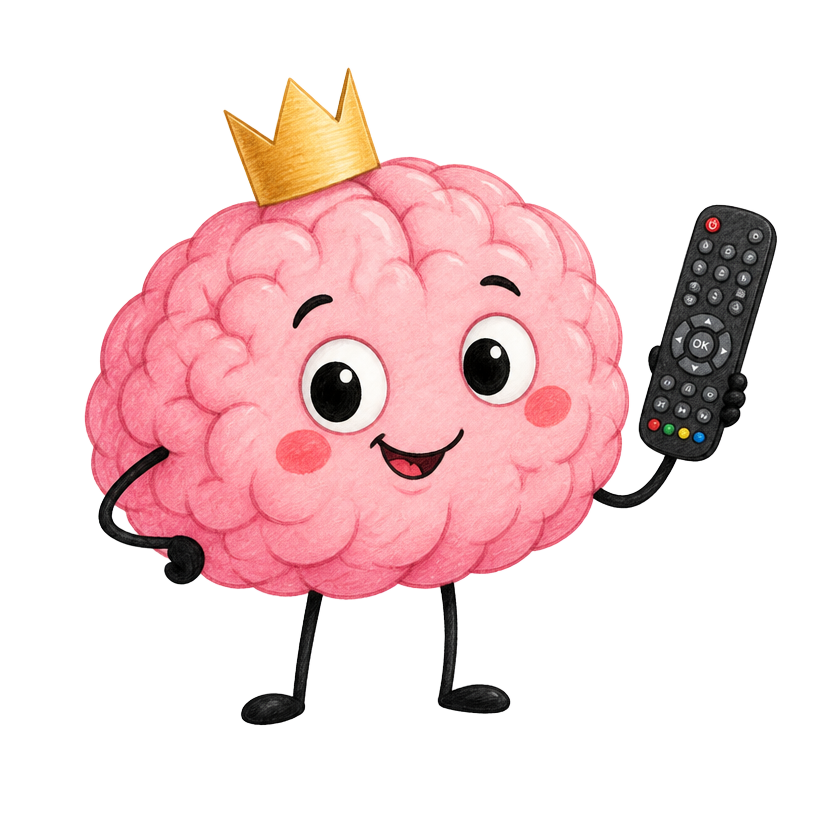
When a child is flooded with adrenaline or big emotions, asking ‘Why did you do that?’ triggers immediate defensive posturing. In The Lazy Brain, Emmeline’s feelings aren’t treated as bad behaviour; they are treated as an opinionated pink brain that needs gentle direction.

Separating the child’s identity from their brain’s reactive impulses creates an instant psychological buffer. It turns a parent-vs-child struggle into a cooperative team effort.

Real-life scenarios & scripting

Instead of: “Stop screaming, it’s not a big deal!”

Try this: “Whoa, it looks like your brain has storm clouds buzzing through it right now. Let’s sit together on the sofa until the wind calms down.”

Instead of: “You need to finish this puzzle right now.”

Try this: “Your brain wants to say ‘NOPE’ today, doesn’t it? Let’s just put in one blue piece together, then we can decide.”

These story-grounded ideas support everyday conversations and do not replace professional medical or therapeutic advice.

Parent & educator hub · 02

Part of the paid bundle

Sensory Sensitivity & Itchy Skin Days

Focus:
Eczema flare-ups, tactile discomfort, and sensory overload
Book tie-in:
Emmeline’s Itchy Adventure

The core idea

“Replace the Friction, Don’t Command It Away”

Telling a young child ‘Stop scratching!’ is almost physically impossible to obey during a flare-up. It adds shame and anxiety on top of genuine physical irritation, which can intensify the itch cycle.

Instead of demanding restraint, offer sensory substitution and playful framing. Treat moisturising and skin care as heroic equipment prep rather than a clinical chore.

These story-grounded ideas support everyday conversations and do not replace professional medical or therapeutic advice.

Parent & educator hub · 03

Part of the paid bundle

Routine Resistance & Transitions

Focus:
Morning school rushes, bedtime stalls, and task-switching
Book tie-in:
The Lazy Brain’s Big Morning

The core idea

“Lower the Cognitive On-Ramp”

Children resist transitions when the gap between what they are doing—comfortable, fun, low effort—and what is expected—shoes, coat, school, bed—feels like a mountain. The Lazy Brain concept reassures them that resistance is normal: everyone’s brain prefers the sofa.

By breaking the morning or bedtime path into clear visual steps and playful micro-goals, you remove the abstract pressure.

These story-grounded ideas support everyday conversations and do not replace professional medical or therapeutic advice.